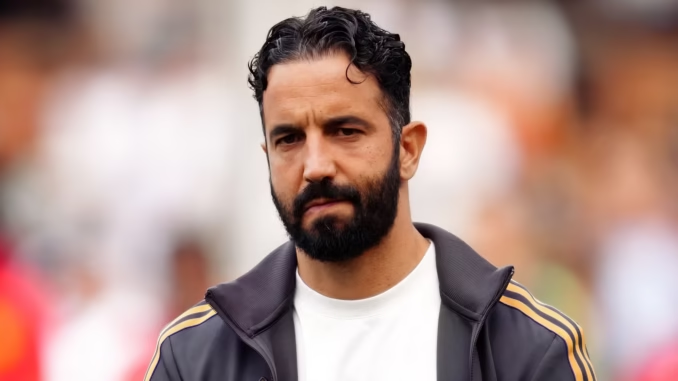
Manchester United’s decision to part ways with Ruben Amorim has prompted further scrutiny of the breakdown in his relationship with the club’s hierarchy. While tactical disagreements and results played a role, fresh detail has emerged around internal dissatisfaction with Amorim’s conduct and public messaging.
Concerns are understood to have built steadily rather than surfacing overnight, with several flashpoints accelerating the club’s decision-making. Reporting has now shed light on some of the key moments that contributed to United concluding Amorim’s position was no longer tenable.
United unhappy with Amorim criticism of players
According to Samuel Luckhurst, Manchester United were unhappy with Amorim’s public criticism of academy players and first-team winger Patrick Dorgu.
Luckhurst reports that senior figures at Old Trafford were particularly unimpressed by Amorim’s comments about academy prospects Harry Amass and Chido Obi. Amorim stated that Amass was “struggling” on loan at Sheffield Wednesday and highlighted Obi’s lack of regular starts for the Under-21s – remarks that did not go down well internally.
Amorim later doubled down on his stance by claiming there was a culture of “entitlement” within the United academy, further straining relations with club leadership.
Tactical frustration and reaction to feedback
United’s hierarchy were also said to be unhappy with the 1-1 draw against Wolverhampton Wanderers, a result that came after Wolves had taken just two points from their previous 18 league matches.
The frustration was heightened by Amorim’s decision to revert to his preferred 3-4-2-1 system, despite United having beaten Newcastle United four days earlier using a back four. Sources indicate this raised questions about adaptability and decision-making.
Luckhurst adds that United were unimpressed by Amorim’s reaction to feedback, with claims that he became increasingly emotional and reactive when challenged by director of football Jason Wilcox, who has been tasked with overseeing the club’s long-term game model.
While Amorim had previously told the hierarchy he would prioritise structural stability in the early phase of his tenure, insiders suggest the club’s concerns were less about the system itself and more about the style of football being produced.
Leave a Reply